Revolutionizing Enterprise Voice Communications with SIP Trunk / SIP Trunking

— SIP Trunking Emerges as the Essential Pillar of the IP Telephony Era —
SIP Trunk / SIP Trunking is transforming enterprise voice communications by leveraging IP networks. Many companies rely on traditional telephone lines (analog or ISDN) as well as IP phones, which have become extremely popular in recent years. To optimize business voice communication at low cost and with greater efficiency, it is essential to choose the right telephony services in the right combination. This is where SIP Trunking truly shines.
目次
Linking Telephones and the Internet with SIP Trunk / SIP Trunking
For organizations that heavily rely on telephones in their operations, one indispensable tool is the SIP Trunk. Because it often remains “behind the scenes” and is described with specialized telecom terminology, many general business professionals may find it a bit hard to grasp. In this section, we will outline what SIP Trunking is, why it emerged, and how it currently fits into today’s business environment. (Note: While the term “SIP Trunk” can also be referred to as “SIP Trunking,” we will use “SIP Trunk” interchangeably hereafter.)
First, let’s clarify SIP (Session Initiation Protocol). In simple terms, it is the internet protocol that “initializes a communication channel.” You might think of it as the “procedure that enables two parties to establish a call.” In the analog telephone world, we rarely think about how a call is set up. However, on the internet—where different networks interconnect—this process isn’t so straightforward.
Before diving deeper, let’s define Trunk. In this context, a trunk is a “bundle of multiple telephone channels.” For example, when an enterprise can utilize several phone lines to connect with an NTT East/West or KDDI exchange—or even directly link two different companies—we often say, “We have configured a trunk between these two points.”
Visualizing a trunk as a bundle of voice channels
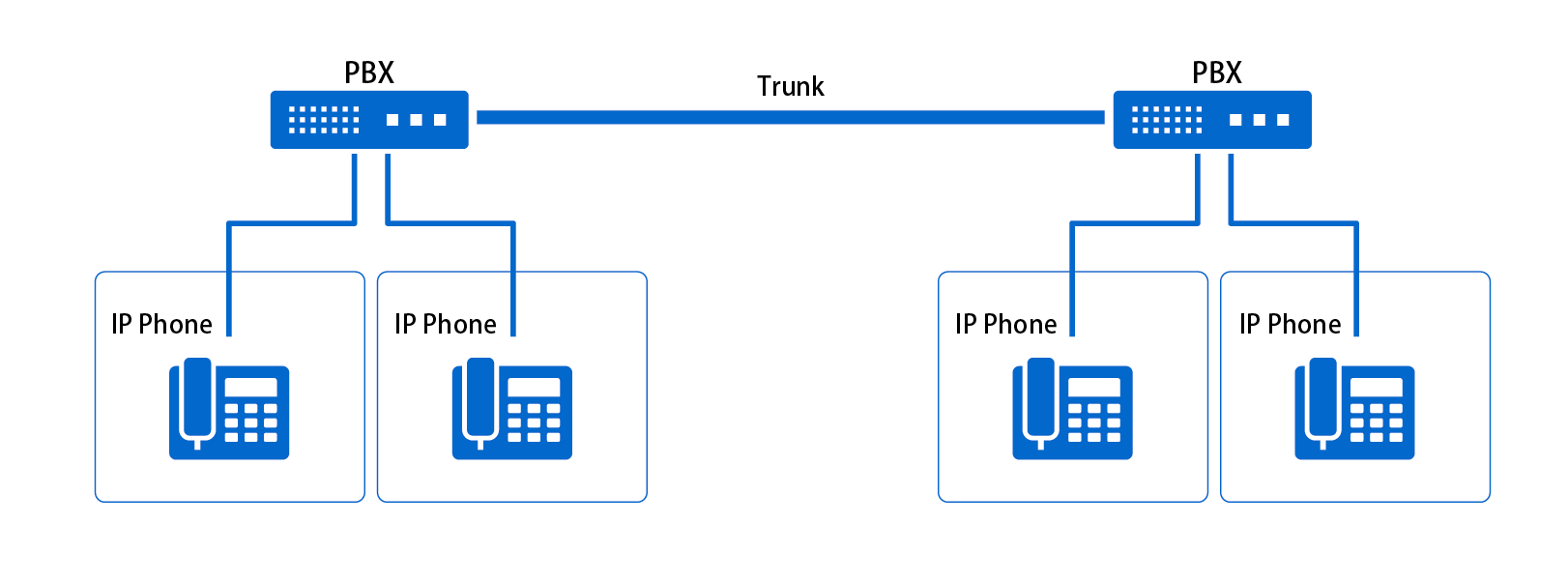
Thus, an SIP Trunk is simply “a system that connects a company’s phone network to the internet using SIP.” From another viewpoint, it is “a service offering an SIP-based trunk for business use.” We will explore how it functions and the benefits for organizations in the sections that follow. But first, let’s quickly recap why telephony differs from the internet—and why unifying them requires specialized technology.
Unifying Different Types of Communication via SIP Trunking
The telephone, invented in 1877, spread from the United States to other developed nations within just a few decades and is now considered part of our social infrastructure. By contrast, the internet—originally a network to share academic papers and data—was opened to the public in the late 1990s and, in a mere 10–20 years, achieved an infrastructure status akin to telephony.
However, telephones and the internet are based on fundamentally different technologies. Phone systems identify the other party by telephone numbers, while the internet uses IP (Internet Protocol) addresses. Telephony requires extremely low latency for clear voice quality, whereas the internet—primarily designed for data sharing and email—can tolerate a certain level of delay.
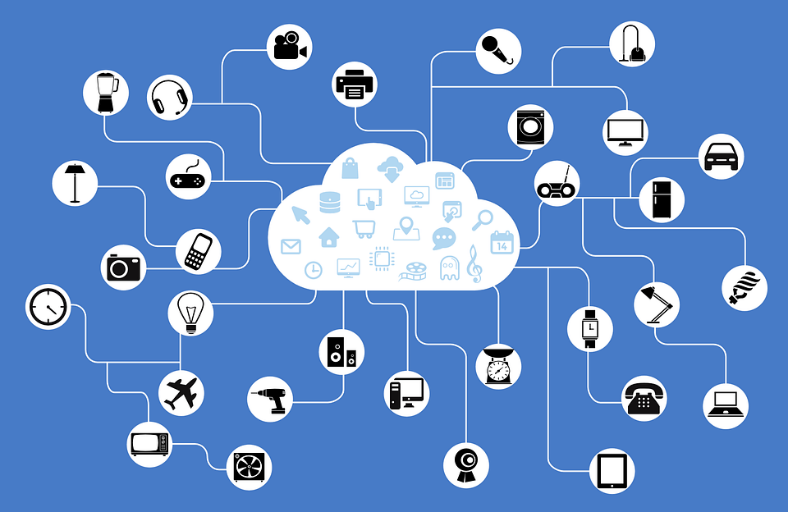
Furthermore, the billing structures differ. Traditional phone systems charge based on distance and time, whereas internet services generally use flat-rate or bandwidth-based billing with almost no constraints on distance or duration. Thus, if we can optimize internet latency to support voice calls, we can make phone services significantly less expensive than conventional lines. SIP Trunking emerged from this convergence of two distinct communication technologies and the growing push toward IP-based voice.
Building Call Paths Over the Internet with SIP
Let’s dive a bit deeper into how SIP sets up calls over the internet.
In the traditional public switched telephone network (PSTN) led by providers like NTT East/West, here’s what happens before a call connects:
- The caller dials a phone number.
- A local exchange processes the call.
- The call may pass through one or more trunk exchanges (if it’s a long-distance call).
- The local exchange for the called party is identified and connected.
- The called party’s phone rings, and once they pick up, the call begins.
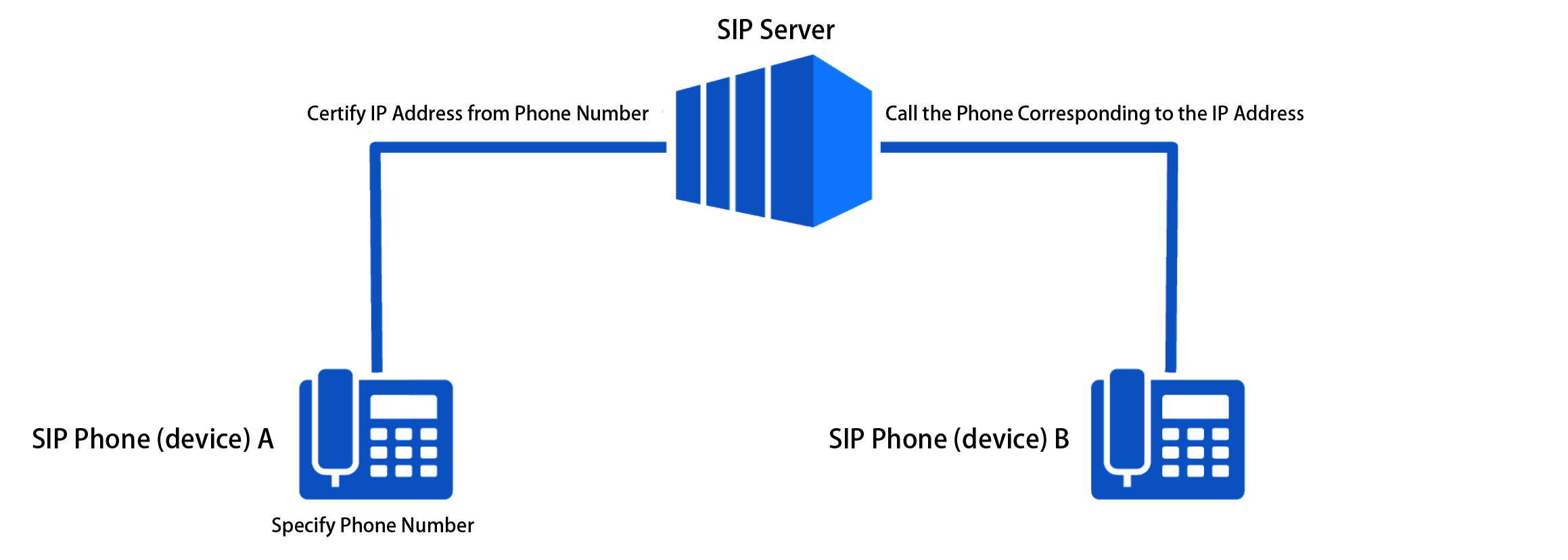
To replicate this on the internet, we need an equivalent process to handle call setup. SIP defines how to establish a session—where the main tasks are “identifying the other party” and “creating the call path.” In practice, this involves mapping phone numbers to IP addresses via a SIP server. When you dial a number, the SIP server checks its database to find the corresponding IP address, contacts the called device, and rings the line. Once answered, the session is established.
Leveraging SIP Features in the Business World
Within enterprises, IP-based networks are now the standard, and IP telephony using SIP is widely adopted. This is where SIP Trunking truly comes into play:
It links the internal IP phone network of a business with the public telephone network.
An SIP Trunk service typically consists of the following elements. Here, the “public network” refers to PSTN (Public Switched Telephone Network) operated by major carriers such as NTT East/West and KDDI.
Illustration of how SIP Trunking connects corporate networks and PSTN via SIP
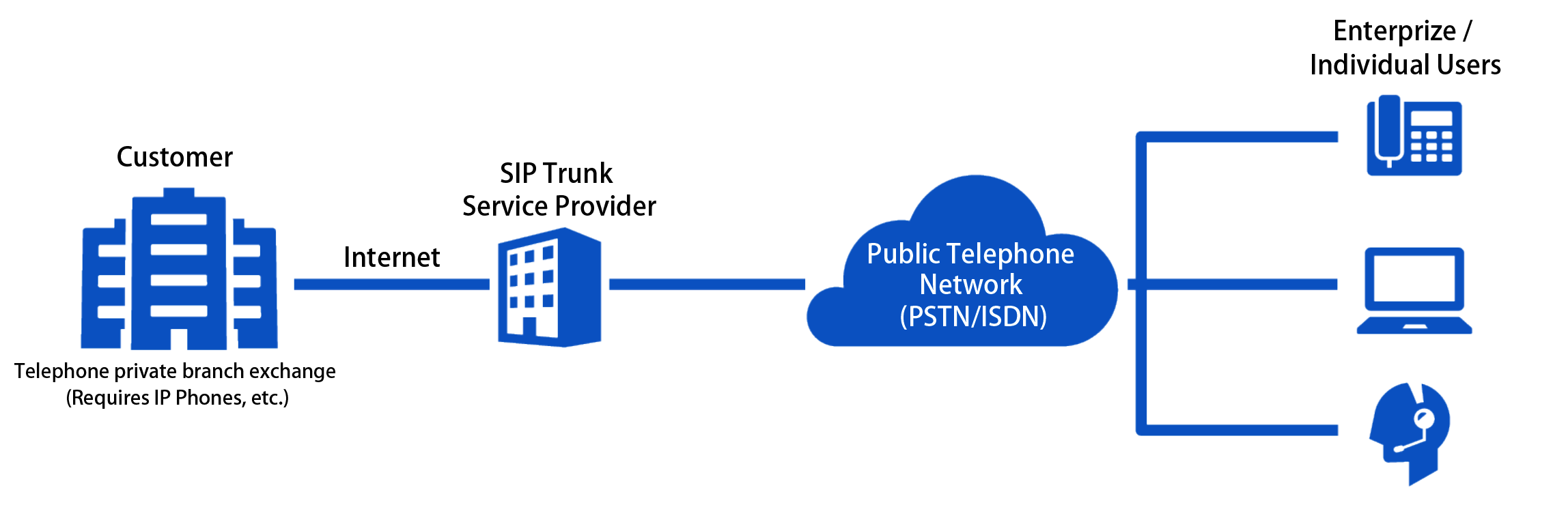
How SIP Trunking Operates
As mentioned, the core function of an SIP Trunk is to “provide SIP-based telephone lines.” It is, in essence, an infrastructure service. Unlike other enterprise solutions—such as installing a database for customer management or deploying a new cloud antivirus for security—an SIP Trunk operates behind the scenes. Its design and operation may vary significantly depending on a company’s specific business environment and system requirements.
A prime example where SIP Trunking stands out is in call centers. Let’s examine how SIP Trunking is deployed and the benefits it can bring from a call center perspective.
Most companies running a call center use a PBX (Private Branch Exchange) to distribute incoming calls from the public network to available lines. Outbound calls go from an operator to the PBX and then out to the public network. By introducing an SIP Trunk, you would connect your corporate voice network (centered around the PBX) to the SIP Trunk provider’s data center (DC) via an internet connection.
Key functions provided by the data center that hosts the SIP Trunk
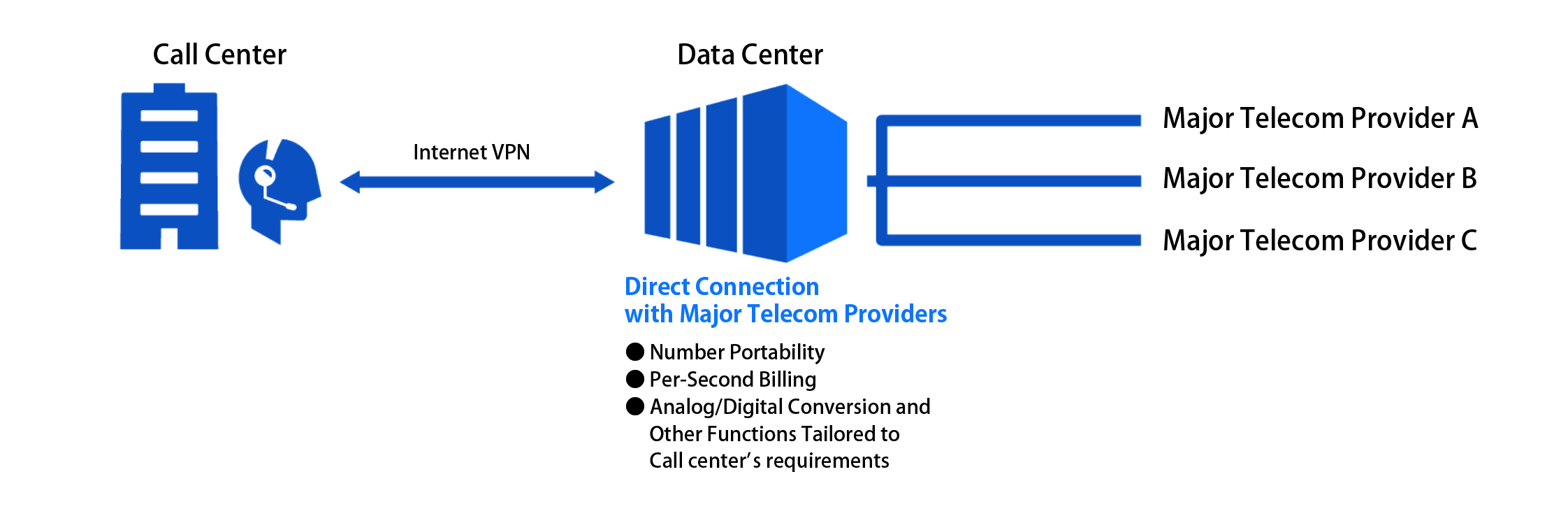
Often, an Internet VPN (Virtual Private Network) is used to create a virtual dedicated line over the public internet—balancing cost-effectiveness and compatibility with IP-based networks. The data center, in turn, must connect with major carriers (like NTT East/West, KDDI) to ensure stable, high-quality calls with end users on the PSTN.
Making the Next Leap in Services with SIP Trunking
By linking a call center PBX to an SIP Trunk provider’s data center, companies can potentially reduce communication costs, design more flexible voice services, and gain substantial scalability and future-proofing.
1. Cost Reduction
As discussed, IP-based services generally do not charge according to distance or call duration. With an SIP Trunk, you use a low-cost internet connection between your office and the data center while increasing the use of IP telephony throughout the organization, thus reducing overall telecom expenses.
2. Flexible Service Design
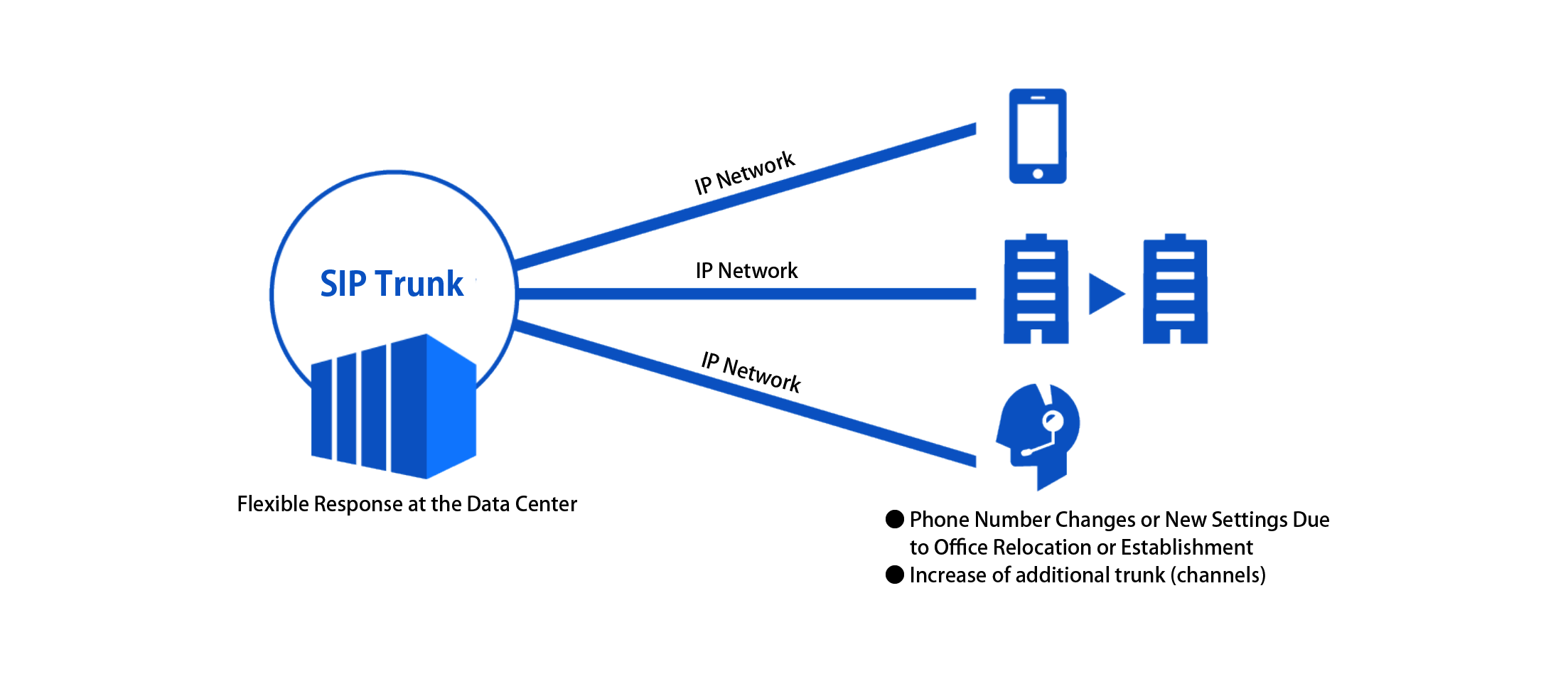
- Traditional telephone numbers are bound to the physical location of local exchanges (like an NTT local office), whereas IP addresses are software-based and not restricted by geographic area.
- When relocating offices, you typically have to change phone numbers and PBX settings for traditional phone services. With SIP Trunking, you can keep the same numbers and avoid complex PBX changes.
- During business surges—like a new product launch—call volumes may spike. An SIP Trunk provider can often scale lines quickly, eliminating the need to purchase or install new physical lines or PBX trunks.
Illustration of how SIP Trunking enables more advanced, flexible services
3. Scalability and Future Growth
One key reason SIP Trunking has become so critical is the accelerating shift toward IP integration globally. Many carriers worldwide are transitioning their public networks to IP-based systems. In Japan, NTT East/West is promoting “PSTN Migration,” aiming to replace traditional telephone lines (PSTN) with IP by around 2025.
As the internet becomes increasingly central to our social infrastructure, voice services originally run over telephone lines will continue moving to IP-based platforms. This change opens doors for integrations—like automatically recording and analyzing call content to improve customer service or marketing insights.
This is the future-forward aspect of SIP Trunking: integrating voice communications with broader IP applications.
Expanding Your Business with SIP Trunking and Voice Communications
Given the ongoing revolution in communication networks driven by IP, SIP Trunking is set to remain a vital link between corporate telephony systems and public networks for at least the foreseeable future. Even as technology evolves over the next five or ten years, companies that place a premium on voice-based communication will benefit greatly from skillfully integrating SIP Trunking into their business strategies.
By leveraging SIP Trunking now, you can address current telephony needs while preparing your organization for the next wave of IP-based innovations—ultimately enhancing the quality, scalability, and cost-efficiency of your enterprise voice communications.

Summary
- SIP Trunk / SIP Trunking connects enterprise IP phone networks with the public switched telephone network using SIP.
- This approach brings cost savings, flexibility, and scalability to businesses—especially those running call centers or relying on high-volume voice operations.
- As telephony and the internet converge, SIP Trunking is rapidly becoming the cornerstone for next-generation business communication infrastructure.
If your organization values voice communication and wants to future-proof its telephony environment, SIP Trunking could be the key to unlocking greater efficiency and advanced services. Feel free to reach out for more information on how to integrate SIP Trunking into your business.
Notes on Terminology
- SIP (Session Initiation Protocol): A protocol that sets up, modifies, and terminates real-time sessions over IP networks (including voice and video calls).
- Trunk: A bundled set of voice channels or lines that connects two points (e.g., your corporate PBX and a provider’s network).
- PSTN (Public Switched Telephone Network): The traditional telephone network, including analog lines and ISDN.
- IP Phone (VoIP): Telephone services delivered over the internet using IP protocols, allowing for lower costs and broader functionality compared to traditional lines.